How to Reheat Food Safely: Best Temperatures and Methods Explained
How to reheat food nicely may sound simple. You take yesterday’s leftovers, warm them up and eat them. However, if you work with food, cook for your family, prepare packed lunches or regularly save leftovers, it is worth knowing how to reheat food properly.
Quick Overview
Reheating food safely is essential for preventing foodborne illness and ensuring leftovers are safe to eat. It’s not just about warming food—it’s about making sure it reaches the correct internal temperature and is heated evenly throughout.
Whether you are cooking at home or working in a food-related environment, this guide walks you through:
✅ Understanding the basics of how to reheat food safely
✅ Choosing the right method (microwave, oven, hob, air fryer, OTG, toaster oven, Instant Pot)
✅ Knowing safe reheating temperatures and when food is properly heated
✅ Avoiding common mistakes like uneven heating, over-reheating, and poor storage
Safe reheating is not just about making food feel warm. It is about heating it thoroughly enough to reduce the risk of harmful bacteria surviving or growing in the food. This is especially important for foods such as rice, chicken, meat, seafood, sauces, cooked pasta, takeaway meals and anything that has been cooled and stored after cooking.
The good news is that reheating food safely is not difficult. You do not need a professional kitchen to do it well. You simply need to understand the correct temperature, the best reheating method for each type of food, and a few basic food hygiene rules.
This guide explains how to reheat food safely using a microwave, oven, hob, air fryer, toaster oven, OTG and Instant Pot. It also covers hot holding, reheating Chinese food, reheating without a microwave, and the common mistakes that can make leftovers unsafe.
Can You Reheat Food?
Yes, you can reheat food, as long as it has been cooked, cooled and stored safely. Understanding how to reheat food safely is an important part of good food hygiene. Most cooked leftovers can be reheated successfully, including soups, stews, curries, pasta dishes, rice dishes, roasted vegetables, pizza, cooked meat and takeaway meals.
However, reheating does not automatically make unsafe food safe again. If food has been left out at room temperature for too long, stored uncovered, kept in the fridge for too many days, or handled poorly, reheating may not be enough to remove the risk.
This is where many people get it wrong. They think, “I’ll just heat it properly and it will be fine.” However, food safety starts before reheating. If cooked food is not cooled and stored correctly, bacteria may multiply. In some cases, bacteria can produce toxins that are not destroyed by normal reheating temperatures.
When learning how to reheat food, it is important to consider how the food was stored as well as how it will be reheated. Before reheating anything, ask yourself a few quick questions. Was the food cooled quickly? Was it stored in the fridge? Has it been kept covered? Has it already been reheated once? Does it look and smell normal? If you are unsure how long it has been left out, it is usually safer not to eat it.
For everyday home use, refrigerate leftovers as soon as they have cooled sufficiently for safe storage. Avoid leaving cooked food sitting on the worktop for extended periods. Use clean containers, keep food covered, and reheat only the portion you intend to eat.
Different foods may require different methods. For example, you may need to know how to reheat food in a microwave for speed and convenience, how to reheat food in an oven for even heating, how to reheat food on a stove for soups and sauces, or how to reheat food in an air fryer when restoring crispness to foods such as pizza, chips or roasted vegetables. Regardless of the method used, safe reheating principles remain the same.
Read more about this: [Can You Reheat Food? A Definitive Guide]
What Temperature Should You Reheat Food To?
The simple rule is this: reheated food should be steaming hot all the way through. Not just warm. Not just hot at the edges. The centre of the food should be properly hot too.
For anyone learning how to reheat food safely, temperature is one of the most important factors. In many UK food safety settings, a practical reheating target is 75°C in the centre of the food. This is why food handlers often use a clean temperature probe in catering, hospitality, healthcare, education and commercial kitchen environments. A thermometer removes the guesswork and helps confirm that food has reached a safe temperature.
At home, you may not always use a food thermometer. In that case, look for clear signs that the food is piping hot throughout. Sauces should bubble. Steam should rise from the middle of the dish. Rice, pasta and mixed meals should be stirred and checked properly. Meat should be hot in its thickest part.
The phrase “all the way through” is important because food can heat unevenly. A bowl of curry may be bubbling around the sides but still be lukewarm in the centre. A lasagne may be hot on top but cool in the middle. A microwave meal may contain both hot spots and cold spots. This is why stirring, turning, covering and allowing standing time are important food safety practices.
If you are reheating food for service, understanding how to reheat food for hot holding is particularly important. Food should first be reheated thoroughly to a safe temperature before being transferred to hot-holding equipment. Hot holding is designed to maintain safe temperatures, not to reheat food from cold.
If you are learning food hygiene for work, remember that safe reheating is part of good food handling practice. Food safety professionals recognise reheating as an essential control measure for reducing the risk of foodborne illness. Readers preparing for roles in catering, hospitality, healthcare, education or food retail should treat reheating as a practical food safety skill rather than simply a kitchen shortcut.
Read more about this: [What Temperature Should You Reheat Food? A Complete Guide]
How Many Times Can You Reheat Food?
When learning how to reheat food safely, one of the most important rules to remember is that food should generally only be reheated once.

This is one of the most important food safety principles. Each time food is cooked, cooled, stored and reheated, it passes through temperature ranges where bacteria can grow if the process is not managed correctly. Reheating the same food repeatedly increases the risk, especially if the food is cooled slowly or left at room temperature between reheating cycles.
The best approach is to portion food before storing it. For example, if you cook a large batch of curry, chilli, rice or pasta sauce, divide it into smaller containers before refrigerating it. This makes how to reheat food more practical because you only need to heat the amount you plan to eat.
This also helps preserve quality. Food that is reheated repeatedly often becomes dry, tough or bland. Smaller portions tend to heat more evenly, retain their texture better and reduce unnecessary waste.
If you reheat a portion and do not finish it, avoid placing it back in the fridge for reheating later. Although it may feel wasteful, food safety guidance generally considers it safer to discard reheated leftovers than to repeatedly cool and reheat the same portion.
Read more about this: [How Many Times Can You Reheat Food? The Complete Guide]
How to Reheat Food Safely: The Basic Rules
Before looking at individual appliances, there are several core principles that apply to almost every method of how to reheat food safely.
First, reheat food thoroughly. The food should be steaming hot throughout before it is eaten. Do not rely solely on the outside temperature or the first spoonful. Always check the centre.
Second, reheat food evenly. This means stirring soups, curries, rice, pasta and sauces during reheating. It also means turning larger pieces of food and spreading food out where possible. Shallow portions generally heat more evenly than deep containers.
Third, add moisture where appropriate. Leftover rice, pasta, chicken and cooked vegetables can dry out during reheating. A small amount of water, stock, sauce or milk can help restore texture and improve heat distribution.
Fourth, cover food when steam is beneficial. A microwave-safe lid, foil in the oven, or a pan lid on the hob can help retain heat and moisture. This technique is particularly useful for rice, pasta, casseroles, curries, stews and other cooked meals.
Fifth, choose the most suitable appliance. Understanding how to reheat food using different cooking equipment can improve both food safety and food quality. The microwave is fast, but it may soften crispy foods. The oven provides more even heating. The hob offers greater control for liquids and sauces. The air fryer excels at restoring crisp textures. Similarly, learning how to reheat food in an OTG, how to reheat food in a toaster oven, or how to reheat food in an Instant Pot can help you achieve better results depending on the type of dish.
The safest method is not always the quickest. It is the method that heats the food thoroughly and suits the characteristics of the meal being reheated.
How to Reheat Food in a Microwave
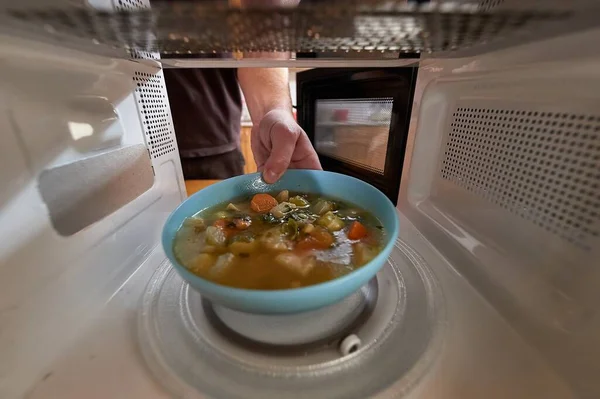
For many households, learning how to reheat food in a microwave is essential because it is one of the quickest and most convenient reheating methods. Microwaves work particularly well for foods with a high moisture content, including soups, stews, curries, chilli, pasta with sauce, cooked vegetables, rice dishes and meal-prep containers.
However, microwaves can heat food unevenly. One area may become extremely hot while another remains cool. This is why proper technique is important when learning how to reheat food safely.
Place food in a microwave-safe dish and spread it out as evenly as possible. If the food appears dry, add a small splash of water, stock, sauce or gravy. Cover the dish with a microwave-safe lid or cover, leaving a small gap for steam to escape.
Heat food in shorter intervals rather than using one long heating cycle. Stir halfway through whenever possible, particularly when reheating rice, pasta, soups, curries and sauces. If stirring is difficult, rotate or reposition the food to encourage more even heating.
After heating, allow the food to stand for one to two minutes. This standing time allows heat to continue moving through the food and helps eliminate cold spots. Always check that the food is steaming hot throughout before serving.
For cooked meat, cutting larger portions into smaller slices before microwaving can help ensure the centre reaches a safe temperature without overcooking the outside. For rice, break up clumps, add a small amount of moisture and stir thoroughly during reheating. Rice should always be steaming hot throughout and should only be reheated once.
The microwave is one of the most effective tools for how to reheat food, but it requires attention to detail. Simply heating food and eating it immediately without checking temperature and consistency may leave cold spots that affect both quality and food safety.
How to Reheat Food on the Stove
When learning how to reheat food safely, the stove (or hob) is one of the most reliable reheating methods. Reheating food on the stove gives you more control than a microwave and is particularly effective for soups, stews, sauces, curries, pasta, rice, noodles and stir-fried dishes.

One of the main advantages of this method is that you can stir the food while it heats. This helps prevent cold spots and makes it easier to adjust the texture. If the food becomes too thick, you can add liquid. If it is heating too quickly, you can reduce the temperature.
Use a saucepan or frying pan that provides enough room for the food. Add a small amount of water, stock, oil, milk or sauce depending on the dish. Heat on a low to medium setting and stir regularly.
For soups, sauces and stews, bring the food to a gentle simmer and continue stirring until it is hot throughout. For pasta, add a little sauce or water to prevent it from drying out. For rice and noodles, add a small amount of water or oil, break up clumps and stir frequently.
Avoid using very high heat. Although it may appear faster, high temperatures can burn the bottom of the food while the centre remains cool. This is especially common with thick sauces, rice dishes and creamy foods.
A lid can help trap steam and distribute heat more evenly. This is useful for rice, noodles, vegetables and dishes that lose moisture quickly. However, stirring remains essential because steam alone does not guarantee safe reheating.
The hob is also excellent for takeaway dishes, including many Chinese food leftovers. Fried rice, noodles, stir-fried vegetables and saucy dishes often reheat more evenly in a pan than in a microwave. For many people researching how to reheat food, the stove remains one of the most dependable methods for achieving both food safety and quality.
How to Reheat Food in the Oven
Understanding how to reheat food in an oven is useful when you want food to heat evenly while maintaining a good texture. The oven is ideal for pizza, lasagne, pasta bakes, casseroles, pies, roast dinners, garlic bread, baked chicken, roasted vegetables and larger portions.
Although the oven takes longer than a microwave, it often produces superior results. It is particularly effective for foods that may become soggy in a microwave or require gentle, consistent heat.
Preheat the oven before reheating. For most leftovers, a temperature between 160°C and 180°C works well. Place the food in an oven-safe dish and cover it with aluminium foil if there is a risk of drying out. Covering the dish helps retain moisture and allows the centre to heat properly.
For thicker dishes such as lasagne, shepherd’s pie, cottage pie or pasta bake, the centre will take longer to heat than the surface. Allow sufficient time and always check the middle before serving. Where available, a food thermometer provides the most reliable confirmation that the food has reheated safely.
For pizza, roasted potatoes, fried foods and breaded items, removing the foil during the final few minutes can help restore crispness and improve texture.
Cooked meat can dry out during oven reheating. Adding a small amount of gravy, stock or sauce and keeping the dish covered for most of the reheating process can help maintain moisture.
The oven is one of the best methods for people learning how to reheat food safely because it provides consistent, even heating for many dishes. Similar principles also apply when learning how to reheat food in an OTG or how to reheat food in a toaster oven, both of which use dry heat and work particularly well for baked, roasted and crispy foods.
How to Reheat Food in an Air Fryer
Many people ask how to reheat food in an air fryer, and the answer is yes—you can. In fact, for certain foods, an air fryer is one of the most effective reheating appliances available.
An air fryer works by circulating hot air around the food. This makes it particularly suitable for foods that should remain crisp rather than soft. It performs well with chips, wedges, fried chicken, breaded fish, pizza slices, roasted vegetables, pastries and some grilled foods.
However, it is not the best choice for soups, stews, rice, pasta with sauce or other foods with a high liquid content. These dishes are generally better reheated on the hob or in a microwave.
To understand how to reheat food safely in an air fryer, begin by preheating the appliance if recommended by the manufacturer. Use a moderate temperature, typically between 160°C and 180°C, depending on the type of food being reheated. Arrange the food in a single layer whenever possible to allow hot air to circulate effectively.
Avoid overcrowding the basket. If food is stacked or piled up, some areas may become crisp while others remain underheated. Shake the basket or turn the food halfway through the reheating process.
For pizza, an air fryer can quickly restore a crisp base and improve the texture of the toppings. For fried chicken, it often recreates the crisp coating more effectively than a microwave. For chips, it generally produces much better results than reheating in a covered container.
However, food safety should never be judged by appearance alone. The exterior may become crisp before the centre reaches a safe temperature. This is particularly important for chicken, meat, pies, thick pastries and breaded foods. Always check that the food is hot throughout before serving.
While this guide focuses on air fryers, similar food safety principles apply when learning how to reheat food in an Instant Pot, how to reheat food in a toaster oven, or how to reheat food in an OTG. Regardless of the appliance used, the goal remains the same: ensure the food is heated thoroughly and evenly to maintain both quality and safety.
Read more about this: [Can You Reheat Food in an Air Fryer]
How to Reheat Food Without a Microwave
Many people assume that a microwave is the only convenient option for leftovers, but learning how to reheat food without a microwave can often produce better results. In many cases, food reheated using alternative methods has a better texture, flavour and overall quality.
For wet foods such as soups, stews, curries, sauces and chilli, the hob is usually the best option. Add a small amount of liquid if needed, heat gently and stir regularly until the food is steaming hot throughout. This is one of the most effective ways of how to reheat food safely while maintaining moisture and flavour.
For baked dishes such as lasagne, pasta bake, casseroles, pizza and pies, use the oven, toaster oven or OTG. Cover the food with foil initially if moisture retention is important, then uncover it towards the end if you want a crisp finish.
For crispy foods such as chips, fried chicken, breaded fish, wedges and pizza slices, an air fryer or oven generally provides better results than a microwave. These appliances help restore texture rather than making the food soft or soggy.
For rice and noodles, the hob often works particularly well. Add a little water or oil, break up any clumps and stir regularly. As with all reheating methods, ensure the food is steaming hot throughout before serving.
If you are wondering how to reheat food, the key principle is to match the reheating method to the type of food. Use the hob for moist dishes, the oven for baked dishes and the air fryer for foods that benefit from a crisp texture.
Read more about this: [How to Reheat Food Without a Microwave: A Complete Kitchen Guide]
How to Reheat Food in a Toaster Oven or OTG
Understanding how to reheat food in a toaster oven or how to reheat food in an OTG is useful when you want oven-style results without heating a full-size oven. Both appliances are particularly suitable for smaller portions, quick snacks and foods that benefit from a crisp exterior.
A toaster oven or OTG works well for pizza slices, garlic bread, pastries, small portions of lasagne, pasta bake, roasted vegetables, baked potatoes, sandwiches and breaded items. They are generally less suitable for soups, stews and very saucy dishes unless you use an appropriate oven-safe container.
The method is similar to reheating food in a conventional oven. Preheat the appliance if required, place the food on a tray or in an oven-safe dish and use a moderate temperature. For many leftovers, temperatures between 160°C and 180°C provide effective reheating. If the food is likely to dry out, loosely cover it with foil during the first stage of reheating.
Because toaster ovens and OTGs have a smaller cooking space, food can brown more quickly than it would in a conventional oven. This can be beneficial for pizza and pastries, but it also means the exterior may heat faster than the centre. Always check the middle of the food before serving.
For pizza, placing the slice directly on a tray or rack can help create a firmer base. For pasta bake or lasagne, use a small oven-safe dish and cover it initially to prevent the surface from browning before the centre is fully heated. For breaded chicken or fried snacks, turn the food halfway through reheating to encourage even heat distribution.
When learning how to reheat food safely, it is important to remember that a browned or crispy exterior does not necessarily mean the centre has reached a safe temperature. The food should always be hot throughout before it is eaten.
How to Reheat Food in an Instant Pot
Many people ask how to reheat food in an Instant Pot, particularly when reheating meal-prep dishes and leftovers. An Instant Pot is especially useful for foods with a high moisture content, including soups, stews, curries, chilli, rice dishes and other saucy meals.
It is generally less suitable for foods that rely on dry heat to maintain texture, such as pizza, chips, pastries and fried foods. These items are usually better reheated in an oven, air fryer, toaster oven or OTG.
For most leftovers, the sauté function offers the simplest and most effective reheating method. Add the food to the inner pot and include a small amount of water, stock or sauce if necessary. Use a low or medium heat setting and stir regularly. Continue heating until the food is steaming hot throughout.
For soups and stews, the Instant Pot can provide even reheating because the food can be stirred during the process. For curries and chilli, a small amount of additional liquid may help if the sauce has thickened during refrigeration. For rice dishes, break apart any clumps, add a little moisture and stir frequently while reheating.
Some people choose to use the steam or pressure-cook functions when learning how to reheat food in an Instant Pot, but these settings are not always necessary. Pressure cooking may overcook smaller portions and can take longer when pressure build-up and release times are considered. It can be useful for larger quantities of moist food, but the sauté function generally provides greater control for everyday leftovers.
As with every reheating appliance, the equipment itself does not guarantee food safety. Understanding how to reheat food safely means focusing on the final temperature of the food rather than the appliance being used. Do not assume food is ready simply because steam appears or the pot feels hot. Stir thoroughly and confirm that the centre of the food is properly heated before serving.
Whether you are learning how to reheat food in an Instant Pot, how to reheat food in a toaster oven, or how to reheat food in an OTG, the same food safety principles apply. Food should be reheated evenly, handled hygienically and served only when it is hot throughout.
How to Reheat Food for Hot Holding
Understanding how to reheat food safely is particularly important when food will be kept hot before serving. Hot holding is different from reheating food for immediate consumption and is mainly relevant in catering, hospitality, care homes, schools, workplace canteens, events and buffet-style service.
Hot holding means keeping cooked or reheated food hot before it is served. In the UK, hot food should generally be held at 63°C or above. This helps reduce the risk of harmful bacteria multiplying while the food is waiting to be served.
A key principle of how to reheat food for hot holding is understanding that hot-holding equipment is not usually designed to reheat cold food. Its purpose is to maintain safe temperatures, not to heat food from chilled conditions. Food should therefore be reheated thoroughly first and then transferred to hot-holding equipment.
For example, if a kitchen is serving soup, curry, rice, gravy or cooked vegetables from a hot-holding unit, the food should first be cooked or reheated until it is piping hot throughout. It can then be transferred to a bain-marie, heated cabinet, soup kettle or other suitable equipment that keeps it at the correct temperature.
In workplace settings, food temperatures may need to be monitored and recorded as part of food safety procedures. Staff may also need to understand the correct actions to take if hot-held food falls below the required temperature. This is why food hygiene training is important for anyone working in catering, hospitality, care, childcare, education or food retail.

At home, you may not think of it as "hot holding", but the same principle applies when keeping food warm for guests. To follow how to reheat food safely principles, avoid leaving food lukewarm for extended periods. Either serve it promptly, keep it properly hot, or cool and refrigerate it safely.
Can You Reheat Chinese Food?
Many people ask how to reheat food safely when dealing with takeaway leftovers, particularly Chinese food. The answer is yes, but extra care should be taken with rice, meat, seafood and mixed dishes.
Chinese takeaway meals often contain several different food types, including rice, noodles, chicken, beef, prawns, vegetables, sauces and crispy items. Because each component reheats differently, understanding how to reheat food correctly depends on the specific dish.
The first consideration is storage. If the takeaway has been left at room temperature for several hours, it may no longer be safe to eat. If it was cooled and refrigerated promptly, it is generally safer to reheat the following day.
Fried rice requires particular attention. Food safety concerns with rice are usually linked to how it is cooled and stored after cooking. When reheating fried rice, add a small splash of water or oil, break up any clumps and stir thoroughly. Whether you use a microwave, hob or wok, ensure the rice is steaming hot throughout. Rice should only be reheated once.
Noodles are often best reheated in a pan or wok. Add a small amount of water, oil or sauce and stir until they loosen and heat evenly. Saucy dishes such as chicken curry, beef in black bean sauce or sweet and sour chicken can be reheated on the hob or in the microwave. Stir regularly and check that the meat is hot in the centre.
Crispy items such as spring rolls, crispy beef, chicken balls and salt-and-pepper chips are usually better reheated in an oven, air fryer, toaster oven or OTG. Although these methods help restore texture, safe reheating remains the priority. If the food contains chicken, meat or seafood, the centre should be thoroughly heated before serving.
When learning how to reheat food safely, it is important to trust storage practices rather than appearance alone. If a takeaway smells unusual, has been stored incorrectly, or you are unsure how long it has been left out, it is safer to discard it than risk food poisoning.
Read more: [Can You Reheat Chinese Food? UK Food Safety Guide]
Foods That Need Extra Care When Reheating
When learning how to reheat food safely, it is important to understand that some foods require extra attention because they can become unsafe if cooked, cooled, stored or reheated incorrectly.
Rice is one of the most commonly discussed examples. Cooked rice should be cooled quickly and refrigerated as soon as possible. It should not be left at room temperature for extended periods. When reheating rice, ensure it is steaming hot throughout and avoid reheating it more than once.
Chicken and other poultry products also require careful reheating. Reheated chicken can become dry, which sometimes leads people to underheat it in an attempt to preserve texture. However, safe reheating remains essential. Cut larger portions into smaller pieces, add moisture where appropriate and check that the thickest part is fully heated.
Seafood should be reheated carefully because it can become rubbery if overheated, while insufficient heating may present food safety concerns. If seafood smells unusual or you are uncertain about its freshness, it is safer not to eat it.
Sauces, soups and gravies can sometimes bubble around the edges while remaining cooler in the middle. Stir thoroughly during reheating and check that the entire dish is hot. Thick sauces require particular attention because heat may distribute unevenly.
Large dishes such as lasagne, cottage pie, shepherd’s pie and casseroles also need additional time. The surface may appear ready before the centre has reached a safe temperature. Covering the dish with foil and using moderate heat can help the middle warm evenly without over-browning the top.
Egg dishes and creamy sauces should be reheated gently because they can split, curdle or become rubbery. Use lower heat settings where possible, stir regularly and still ensure the food is hot throughout before serving.
A key lesson in how to reheat food is that different foods respond differently to heat. Safe reheating is not just about making food warm; it is about ensuring that every part of the dish reaches a safe temperature while maintaining the best possible quality.
Quick Guide: Best Reheating Method by Food Type
| Food type | Best method | Helpful tip |
| Soup or stew | Hob or microwave | Stir well and heat until steaming |
| Curry or chilli | Hob or microwave | Add a splash of water if thickened |
| Rice | Hob or microwave | Add moisture, break up clumps and reheat once |
| Pizza | Oven, air fryer, toaster oven or OTG | Use dry heat to restore the base |
| Pasta bake or lasagne | Oven, toaster oven or OTG | Cover first, then uncover near the end |
| Fried chicken | Air fryer or oven | Turn halfway and check the centre |
| Chips or wedges | Air fryer or oven | Avoid microwave if you want crispness |
| Noodles | Hob or wok | Add sauce or water and stir often |
| Roast dinner | Oven or hob, depending on item | Add gravy or stock to prevent dryness |
| Chinese takeaway | Depends on the dish | Use hob for noodles/rice, air fryer for crispy items |
This table gives a helpful starting point, but safety still comes first. The best method is the one that reheats the food evenly and thoroughly.
Common Reheating Mistakes to Avoid
When learning how to reheat food safely, one of the most common mistakes is reheating food in a portion that is too large. Deep containers take longer to heat, and the centre may remain cool even when the outside appears hot. Smaller, flatter portions heat more evenly and reduce food safety risks.
Another frequent mistake is not stirring food during microwave reheating. Microwaves can create uneven heating, leading to hot and cold spots. Stirring and allowing standing time are essential, particularly when reheating rice, pasta, soup, curry, stew and sauces.
Many people also reheat food more than once. From a food safety perspective, this is not recommended. A better approach when learning how to reheat food is to store leftovers in smaller portions so you only heat what you need each time.
Using the wrong appliance can also cause issues. A microwave is fast but may make pizza, chips and fried food soggy. An air fryer is excellent for crisp foods but unsuitable for soups or very saucy dishes. A hob is effective for wet foods, but overheating can lead to burning or uneven results if not managed carefully.
Another common mistake is relying on smell alone. While spoilage can sometimes be detected by odour, unsafe food does not always smell or look bad. Safe reheating depends on correct storage time, temperature control and proper reheating technique.
Finally, do not rely only on surface temperature. A dish may look hot, bubble at the edges or appear crisp on top while the centre remains underheated. Always check the middle, especially for thicker or layered foods.
How Long Should You Reheat Food For?
When considering how to reheat food safely, there is no fixed reheating time that applies to every food. Time depends on portion size, appliance, container, food type and whether the food has come straight from the fridge.
A small bowl of soup may take only a few minutes in a microwave or on the hob. A thick lasagne may require 20 minutes or more in the oven. A pizza slice may reheat in just a few minutes in an air fryer. A large casserole will usually take longer because heat must reach the centre gradually.
This is why time alone is not a reliable safety indicator. Instead, focus on results. The food should be steaming hot all the way through. Where possible, use a food thermometer to check the thickest part of the dish. If a thermometer is not available, stir, test the centre and ensure there are no cold spots.
For packaged foods, always follow manufacturer instructions. Ready meals and chilled prepared foods often include specific microwave or oven guidelines designed to ensure safe reheating.
Final Safety Checklist Before Eating Reheated Food
Before eating, it is useful to follow a simple mental checklist when applying how to reheat food safely at home or in a professional setting.
Was the food cooled and stored correctly? Has it been kept in the fridge at a safe temperature? Has it already been reheated before? Is it steaming hot throughout? Have you stirred or checked the centre properly? Are you eating it immediately after reheating?
If you are unsure about any of these points, it is safer to be cautious. This is especially important when preparing food for children, older adults, pregnant individuals or anyone with a weakened immune system.
For food industry workers, these checks are not just personal habits but part of formal food hygiene practice. Safe reheating helps protect customers, colleagues and the reputation of the business. It is a core part of professional food safety training in catering, hospitality, care and retail environments.
Training providers such as Training Facility UK emphasise practical food safety skills because small habits can make a significant difference in preventing foodborne illness. Understanding how to reheat food correctly is valuable both at home and in professional kitchens, including cafés, hotels, schools, nurseries and care settings.
Conclusion
Reheating food safely is not just about making leftovers edible again. It is about applying correct food handling practices to ensure food is heated thoroughly, cold spots are avoided and the risk of foodborne illness is reduced.
The main principle of how to reheat food safely is simple: food should be heated until it is steaming hot all the way through. In many food safety environments, 75°C in the centre of the food is used as a practical benchmark. As a general rule, food should only be reheated once, and hot-held food should be maintained at 63°C or above.
The most suitable reheating method depends on the type of food. Use a microwave for quick reheating of moist dishes, a hob for soups and sauces, an oven for baked meals, an air fryer for crispy foods, and a toaster oven or OTG for smaller oven-style portions. An Instant Pot can also be effective for moist foods such as soups, stews and curries.
Extra care should always be taken with rice, chicken, seafood, takeaway meals and large dishes. Proper storage, portion control and correct reheating techniques all play a role in food safety. Always check the centre of the food before eating.
Once these principles are understood, safe reheating becomes a simple and consistent habit. It helps reduce food waste, save money, improve meal quality and build stronger food hygiene awareness, whether at home or in professional food environments.