The Rise and Fall of Great Civilizations
- Lifetime Access
- Duration: 6 hours
- Last Update: September 4, 2025
Looking to purchase at bulk for your team?
Please contact us with your team size and desired course titles at [email protected]
The Rise and Fall of Great Civilizations — Fast-Track Learning for History Enthusiasts and Professionals
Overview
History is not just a record of the past—it is a treasure trove of lessons, strategies, successes, and failures. The course “The Rise and Fall of Great Civilizations” explores the sweeping arc of human achievement, examining how societies rose to greatness, the challenges they faced, and why some eventually declined. This course provides a concise, high-impact, and fast-track learning experience, enabling learners to complete it quickly, earn a certificate fast, and gain job-ready knowledge that is applicable in education, cultural studies, public history, and professional research.
Unlike traditional history courses, which can be long, detailed, and theoretical, this course is deliberately shorter, delivering core insights efficiently without sacrificing depth. Students will examine major civilizations—from Mesopotamia to the British Empire—analyzing political, economic, social, and cultural factors that contributed to their rise and fall. They will also explore lessons that modern societies can draw from history, developing critical thinking, analytical skills, and an understanding of historical patterns applicable in professional and academic contexts.
By the end of this course, learners will be equipped with historical knowledge, analytical insight, and practical perspectives that can be applied in careers in education, cultural heritage, research, and beyond.
Course Description
“The Rise and Fall of Great Civilizations” is a practical, fast-paced course designed for learners who want to gain a deep understanding of major civilizations while completing a course efficiently. The program balances historical theory, cultural insight, and professional applicability, making it suitable for students, educators, researchers, and professionals seeking job-ready skills and a certificate quickly.
The course examines civilizations across time and geography, focusing on how human societies evolved, adapted, and ultimately declined. Learners will explore:
-
Foundational principles of civilization, including governance, economy, culture, and technology
-
Major ancient civilizations, such as Mesopotamia, Egypt, and Classical Greece
-
Empires and global interactions, including Rome, Asian civilizations, and the Islamic world
-
Medieval, Renaissance, and modern transformations, including the British Empire
-
Patterns of growth, stability, and decline applicable to contemporary societal and organizational analysis
This course emphasizes practical learning outcomes, enabling students to:
-
Understand the historical, cultural, and social factors that shape civilizations
-
Apply historical lessons to contemporary issues in governance, culture, and society
-
Develop analytical thinking, research skills, and professional insights
-
Gain a certificate quickly to support career advancement, teaching credentials, or academic portfolios
The Rise and Fall of Great Civilizations is ideal for learners who want fast, actionable knowledge, not just long theoretical lectures. Its short, structured modules allow students to complete the course quickly and gain credentials that demonstrate expertise in historical analysis.
Course Curriculum
The course is structured into 10 modules, each designed to provide concise, practical, and engaging learning:
Module 1: Foundations of Civilization
This module introduces the core principles of civilization, including governance, social organization, technology, economy, and culture. Learners will explore what defines a civilization and why some societies develop complex structures while others remain small-scale.
Module 2: Ancient Mesopotamia
Explore the world’s first urban societies, including Sumer, Akkad, Babylon, and Assyria. This module examines governance, law (including the Code of Hammurabi), trade, religion, and innovation in early human societies.
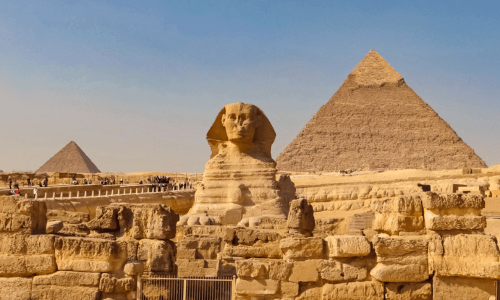
Module 3: Ancient Egypt
Study the civilization along the Nile, its political structure, monumental architecture, cultural achievements, and religious practices. Learners will analyze the factors contributing to Egypt’s longevity and eventual decline.
Module 4: Classical Greece
Discover the rise of democracy, philosophy, arts, and science in ancient Greece. This module emphasizes the political, cultural, and military achievements of city-states such as Athens and Sparta.
Module 5: The Roman Empire
Examine the expansion, governance, military conquests, and infrastructure of Rome. Learners will study the factors leading to Rome’s dominance and the causes behind its eventual fall, including economic strain, invasions, and political instability.
Module 6: Civilizations of Asia
Explore the major civilizations of Asia, including China, India, and Japan. Learners will study dynasties, philosophical traditions, trade networks, technological innovations, and cultural achievements.
Module 7: The Islamic World
Examine the rise of Islamic civilizations, including the Caliphates, intellectual achievements, trade, and cultural influence. Learners will understand how religion, governance, and innovation shaped these societies.
Module 8: Medieval and Renaissance Europe
Study the transformation of Europe after the fall of Rome, including the feudal system, the Church, the Renaissance, and the rise of nation-states. Learners will explore how social, economic, and cultural changes influenced European development.
Module 9: The British Empire
Analyze the expansion, governance, trade, and global impact of the British Empire. Learners will study the factors behind its rise, industrial and colonial influence, and eventual decline in the 20th century.
Module 10: Lessons from Civilizations
The final module synthesizes the course, exploring patterns of rise and decline, societal resilience, leadership, cultural adaptation, and lessons applicable to modern organizations, governments, and communities.
Who Is This Course For?
“The Rise and Fall of Great Civilizations” is designed for learners who want fast, structured, and job-ready historical knowledge. It is ideal for:
-
Students of history, archaeology, and cultural studies seeking an accelerated learning experience
-
Educators and teachers looking to enhance teaching credentials and curriculum expertise
-
Researchers and professionals in cultural heritage, museums, or historical consultancy
-
Writers, journalists, and content creators who want historically-informed insights for storytelling
-
Policy analysts, political scientists, and organizational leaders interested in learning from historical patterns of governance, economy, and society
-
Anyone seeking a fast-track certificate in history for career advancement or academic portfolios
This course is particularly suited for learners who want high-value, concise knowledge, practical insights, and a certificate quickly, without spending months on traditional history programs.
Why Choose This Course?
-
Shorter Than Traditional History Courses
Many courses on world civilizations are long, dense, and time-consuming. This course is streamlined, enabling learners to complete it efficiently without compromising quality. -
Fast Certification
Upon completion, learners receive a certificate quickly, providing professional validation for resumes, CVs, and academic portfolios. -
Job-Ready Knowledge
The course emphasizes practical applications of historical analysis, enabling learners to apply insights in education, research, policy, writing, and cultural professions. -
Comprehensive Curriculum
From Mesopotamia to the British Empire, learners gain a global perspective, understanding political, social, cultural, and economic factors shaping civilizations. -
Analytical and Critical Thinking Skills
Learners develop research skills, pattern recognition, and analytical thinking by studying the rise and fall of diverse civilizations. -
Flexible, Self-Paced Learning
The course is self-paced, allowing learners to balance study with work, family, or other commitments. -
Future-Focused Application
Insights from historical civilizations provide guidance on leadership, societal resilience, adaptation, and governance relevant to modern contexts.
Frequently Asked Questions (FAQ)
1. How long does it take to complete “The Rise and Fall of Great Civilizations”?
This course is shorter than comparable history courses, enabling learners to finish it efficiently and gain certification quickly.
2. Will I get a certificate after completing the course?
Yes. Learners receive a certificate of completion, suitable for CVs, LinkedIn, academic portfolios, or professional credentials.
3. Do I need prior history knowledge?
No. The course is designed for beginners, students, and professionals alike. It starts with foundational principles and builds to advanced analysis.
4. Is this course useful for job applications?
Absolutely. Knowledge of civilizations, analytical skills, and historical insights are valuable in education, research, policy, and cultural sectors, making this course job-ready.
5. Is the course theoretical or practical?
Both. The course combines historical theory with practical insights, emphasizing lessons applicable in professional, educational, and organizational contexts.
6. Can I study this course online at my own pace?
Yes. It is self-paced, allowing learners to balance study with work, family, or other commitments.
7. Does the course cover global civilizations?
Yes. The curriculum spans Mesopotamia, Egypt, Greece, Rome, Asia, the Islamic World, Medieval and Renaissance Europe, and the British Empire.
8. Will I learn lessons applicable to modern society?
Yes. Module 10 focuses on patterns of rise and fall, societal resilience, governance, and leadership, drawing lessons for contemporary contexts.
9. Is this course suitable for educators?
Yes. Teachers and educators can use insights from the course to enhance lesson plans, curriculum design, and historical instruction.
10. What makes this course different from other history programs?
-
Shorter and faster to complete
-
Fast-track certification
-
Job-ready and practical focus
-
Global and comparative perspective
-
Self-paced and flexible for busy learners
Conclusion
The Rise and Fall of Great Civilizations is more than a history course—it is a fast-track learning experience that equips learners with knowledge, analytical skills, and a certificate to enhance careers and academic portfolios. By completing this course, learners will:
-
Understand the foundations, achievements, and declines of major civilizations
-
Gain insights from Mesopotamia to the British Empire, analyzing political, cultural, and social factors
-
Develop critical thinking and analytical skills applicable to modern governance, policy, and research
-
Learn lessons from history that inform leadership, societal planning, and resilience
-
Earn a certificate quickly, enhancing CVs, portfolios, and professional credibility
-
Gain job-ready knowledge applicable in education, cultural heritage, research, policy, and content creation
Whether you are a student, educator, professional, or history enthusiast, this course provides concise, high-impact, and actionable insights into the rise and fall of civilizations.
- CPD International Quality Accredited
- Meets UK & EU legal requirements
- Instant e-certificate and eligibility of ordering hardcopy
- Developed by Industry Experts
- Learn anytime from anywhere
- Use any internet-connected device
- 24/7 Live Support
- Discounts on bulk purchases
Course Curriculum
Module 1_ Foundations of Civilization
-
Foundations of Civilization
00:00
Module 2_ Ancient Mesopotamia
-
Ancient Mesopotamia
00:00
Module 3_ Ancient Egypt
-
Ancient Egypt
00:00
Module 4_ Classical Greece
-
Classical Greece
00:00
Module 5_ The Roman Empire
-
The Roman Empire
00:00
Module 6_ Civilizations of Asia
-
Civilizations of Asia
00:00
Module 7_ The Islamic World
-
The Islamic World
00:00
Module 8_ Medieval and Renaissance Europe
-
Medieval and Renaissance Europe
00:00
Module 9_ The British Empire
-
The British Empire
00:00
Module 10_ Lessons from Civilizations
-
Lessons from Civilizations
00:00
- Lifetime Access
- Duration: 6 hours
- Last Update: September 4, 2025
Looking to purchase at bulk for your team?
Please contact us with your team size and desired course titles at [email protected]
The Course is Accredited