Coping with Trauma and PTSD

- Lifetime Access
- All Levels
- PDF Certificate
Have Faith In
Learning With Us
Overview
Coping with Trauma and PTSD — Professional, Fast-Track Training for Job-Ready Skills
Overview
Trauma and Post-Traumatic Stress Disorder (PTSD) affect millions of people worldwide, influencing emotional wellbeing, daily functioning, and personal growth. Understanding trauma and how to support those affected is an essential skill for professionals in mental health, social care, education, community support, and therapeutic roles.
The course “Coping with Trauma and PTSD” is a short, intensive, high-impact training programme designed to give learners a clear, practical understanding of trauma and PTSD, alongside key therapeutic approaches used to support recovery. Unlike traditional, lengthy courses, this course is deliberately shorter, enabling you to complete it quickly, receive a certificate fast, and become job-ready in a fraction of the time.
This course is not just theory—it’s practical, action-oriented, and tailored to prepare learners to apply trauma-informed understanding in real-world settings. By the end, you will have a solid grasp of PTSD, the causes and symptoms of trauma, and therapeutic interventions like DBT, EMDR, and REBT, as well as the ability to communicate sensitively, recognize symptoms, and provide informed support in professional or community contexts.
Whether you are aspiring to work in mental health support, social care, education, youth work, or related sectors—or you are a professional looking to enhance your credentials—Coping with Trauma and PTSD equips you with immediately applicable, job-ready knowledge.
Course Description
Coping with Trauma and PTSD is a focused and practical training programme designed to provide learners with a deep understanding of PTSD, trauma responses, and therapeutic approaches. While many similar courses are long, academic, or overly theoretical, this course is intentionally shorter and streamlined, offering a fast-track path to certification and professional competence.
Throughout the course, learners explore:
-
The causes and symptoms of PTSD and how trauma manifests in daily life
-
Key therapeutic approaches for trauma recovery, including Dialectical Behaviour Therapy (DBT), Eye Movement Desensitisation and Reprocessing (EMDR), and Rational Emotive Behaviour Therapy (REBT)
-
How to recognize PTSD in various contexts
-
Comparative insights into different therapy models and their applications
This course provides practical knowledge that can be applied immediately in professional or community settings, preparing learners to:
-
Support clients, students, or community members in trauma-informed ways
-
Recognize triggers and symptoms associated with PTSD
-
Communicate sensitively and effectively with individuals affected by trauma
-
Understand key therapeutic models and their real-world application
By completing Coping with Trauma and PTSD, learners gain a certificate quickly, enhancing employability in roles that involve mental health support, social care, educational support, counselling assistance, or community services.
The course is highly practical, job-focused, and designed to build confidence, making it an excellent choice for those who want to strengthen their CV while gaining real-world skills.
Course Curriculum
The course is broken into 6 modules, each carefully designed to provide high-impact learning in a condensed format:
Module 1: Introduction to PTSD and the Options for Therapy
This module provides a foundational understanding of PTSD, including its definition, prevalence, and impact on individuals’ emotional, psychological, and physical wellbeing. Learners will explore the range of therapeutic options, understanding which interventions are evidence-based and suitable for different contexts. This module lays the groundwork for understanding trauma-informed care.
Module 2: Dialectical Behaviour Therapy (DBT)
DBT is a structured therapeutic approach widely used to support individuals with emotional dysregulation, self-harm tendencies, and trauma-related challenges. This module explores the principles of DBT, its practical techniques for emotional regulation, distress tolerance, mindfulness, and how it can be applied to PTSD recovery in supportive professional contexts.
Module 3: Eye Movement Desensitisation and Reprocessing (EMDR)
EMDR is a highly effective, evidence-based approach for trauma processing. Learners will understand the basic principles of EMDR, how it is applied in therapy, and how it supports clients in desensitising traumatic memories, reducing distress, and promoting adaptive processing.
Module 4: Rational Emotive Behaviour Therapy (REBT)
REBT is a cognitive-behavioural approach that helps individuals challenge unhelpful thoughts and beliefs that contribute to emotional distress. This module focuses on how REBT techniques can support PTSD recovery, build resilience, and improve coping mechanisms in professional and therapeutic settings.
Module 5: Causes and Symptoms of PTSD
This module explores the wide range of trauma experiences that can lead to PTSD, including single-incident trauma, complex trauma, and cumulative trauma. Learners will also study common symptoms—such as hyperarousal, flashbacks, avoidance, and emotional dysregulation—and gain insight into how PTSD manifests differently in various populations.
Module 6: Comparing DBT, REBT, and EMDR for PTSD
The final module consolidates knowledge by comparing the three therapeutic approaches—DBT, REBT, and EMDR—highlighting their strengths, limitations, and contexts for use. Learners will develop a practical framework for understanding which approach may be most appropriate for different scenarios, and how these therapies intersect with trauma-informed support in professional environments.
Who Is This Course For?
Coping with Trauma and PTSD is designed for learners who want fast, practical, job-ready knowledge about trauma and PTSD, without the long time commitment of traditional programmes. It is suitable for:
-
Aspiring mental health professionals preparing for careers in counselling, social work, therapy support, or clinical assistance
-
Social care workers and support staff who work with trauma-affected populations
-
Youth workers, community volunteers, and educators seeking trauma-informed practice skills
-
Health and wellbeing professionals looking to enhance their understanding of trauma
-
Students or early-career professionals who want a fast-track certificate for CV enhancement
-
Anyone aiming to work in roles that require trauma-awareness and PTSD knowledge
This course is particularly effective for learners who need:
-
Fast certification for CV or job applications
-
Practical knowledge applicable immediately in professional contexts
-
A shorter course without sacrificing depth or quality
-
Foundational training in therapeutic approaches for PTSD
Why Choose This Course?
Coping with Trauma and PTSD offers unique advantages compared to other courses:
-
Shorter Than Similar Courses
While most trauma and PTSD courses can take months, this course is designed to be completed efficiently, allowing learners to gain knowledge and certification in minimal time. -
Fast Certification
Upon completion, learners receive a certificate quickly, enabling them to demonstrate competence and professionalism in job applications, CVs, or professional development portfolios. -
Job-Ready Knowledge
The course focuses on practical applications, helping learners understand how trauma manifests, recognize PTSD symptoms, and support individuals in real-world settings. -
Comprehensive Yet Concise Curriculum
From foundational knowledge of PTSD to practical therapeutic approaches (DBT, EMDR, REBT), learners gain a well-rounded understanding in a condensed, high-impact format. -
Flexible, Self-Paced Learning
The course is designed for busy learners. You can study at your own pace, balance other commitments, and complete it efficiently. -
Evidence-Based Content
The training is grounded in current research and evidence-based practices, ensuring learners receive reliable, professional insights.
Frequently Asked Questions (FAQ)
1. How long does it take to complete “Coping with Trauma and PTSD”?
This course is intentionally shorter than most PTSD or trauma courses, allowing learners to complete it quickly while retaining depth and quality.
2. Will I receive a certificate after completing the course?
Yes. Upon completion, you will receive a certificate of completion suitable for CVs, job applications, or professional development records.
3. Do I need prior experience in mental health or therapy?
No. The course is designed for beginners, early-career professionals, and those with some experience who want to consolidate knowledge quickly.
4. Can this course help me in job applications?
Absolutely. The course is job-ready, providing knowledge and skills that employers in social care, education, community support, and mental health value highly.
5. Is this course theoretical or practical?
Both. The course combines theory on PTSD and trauma with practical insights into therapeutic approaches (DBT, EMDR, REBT) and trauma-informed care.
6. Can I study this course online at my own pace?
Yes. The course is self-paced, giving you flexibility to balance learning with other commitments.
7. Does the course cover multiple therapeutic approaches?
Yes. You will study DBT, EMDR, and REBT, learning when and how each approach can be applied in supporting trauma-affected individuals.
8. Is this course suitable for those supporting others rather than treating clinically?
Yes. The course is designed for support roles, education, community work, and professional development, not for clinical diagnosis or treatment.
9. Will I learn how to recognize PTSD symptoms?
Yes. The course covers common causes, triggers, and symptoms, helping learners identify and understand PTSD in professional contexts.
10. What makes this course different from other trauma courses?
-
Shorter and faster to complete
-
Certificate available quickly
-
Job-ready, practical applications
-
Evidence-based content on multiple therapeutic approaches
-
Ideal for early-career professionals or those looking to enhance their CV quickly
Conclusion
Coping with Trauma and PTSD is a fast-track, high-impact course for anyone wanting to understand trauma, PTSD, and therapeutic approaches in a professional, job-ready way. The course is intentionally shorter than traditional programmes, allowing learners to:
-
Gain practical knowledge quickly
-
Understand PTSD symptoms, causes, and triggers
-
Learn key therapeutic approaches including DBT, EMDR, and REBT
-
Apply trauma-informed practices in real-world professional contexts
-
Earn a certificate fast to enhance employability and career prospects
Whether you are aiming to work in social care, community support, education, mental health, or professional wellbeing roles, this course gives you the knowledge, confidence, and credentials to support trauma-affected individuals effectively.
Course Content
Module 1_ Introduction to PTSD and the Options for Therapy.docx_compressed
-
Introduction to PTSD and the Options for Therapy.docx_compressed
00:00
Module 2_ Dialectical Behaviour Therapy.docx_compressed
Module 3_ Eye Movement Desensitisation and Reprocessing.docx_compressed
Module 4_ Rational Emotive Behaviour Therapy.docx_compressed
Module 5_ Causes and Symptoms of PTSD.docx_compressed
Module 6_ Comparing DBT, REBT, and EMDR for PTSD.docx_compressed
Words That Inspire us to Growth
Frequently Asked Questions
Similar Courses



Get Your Certificate Today
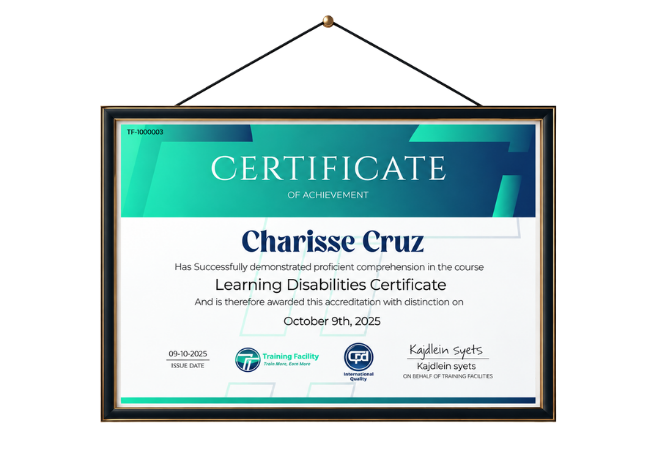
Upon successfully completing this course, you will immediately receive a digital certificate. Additionally, a physical certificate can be purchased. All of our courses are fully accredited, equipping you with up-to-date skills and knowledge to enhance your competence and effectiveness in your field. While our certifications have no expiry dates, we recommend checking the course materials often as we continuously update them to be more relevant.
Order Now